





How corrosion protection practices vary by semi trailer manufacturer
Corrosion protection is one of the clearest areas where one semi trailer can look comparable to another at delivery yet perform very differently after several years of service. For a business evaluator, the visible paint color and gloss offer little evidence on their own. The meaningful comparison is how a Semi Trailer Manufacturer prepares the steel, treats enclosed sections and welded joints, applies and cures coatings, and designs the trailer so water, salt, cargo residue, and road debris do not remain trapped.
The right protection level depends on the operating environment. A flatbed moving dry machinery on maintained inland roads faces a different corrosion load from a trailer used around ports, fertilizer facilities, coastal construction sites, or seasonal de-icing routes. Manufacturers therefore differ not only in coating materials, but also in the discipline of their production process and in whether the specification can be matched to the fleet's actual exposure.
Steel preparation separates durable coating from cosmetic paint
Most coating failures begin before paint is applied. Steel plate, fabricated beams, and welded assemblies can carry mill scale, welding spatter, oil, moisture, oxidation, and shop dust. If these contaminants remain, paint may adhere at first but lose its bond as moisture reaches the steel beneath the film.
One manufacturer may use limited mechanical cleaning followed by primer and topcoat. Another may use a more controlled blasting process, inspect surface cleanliness, remove weld spatter and sharp edges, then apply the specified system within a defined time window. The difference can be difficult to see on a new trailer, yet it strongly affects whether corrosion starts around cross-members, seams, suspension brackets, and deck supports.
Business evaluators should ask for a process description rather than a generic statement such as “high-quality anti-rust paint.” Useful questions include:
- Is the main chassis blasted before primer application, and are fabricated components cleaned before assembly or after welding?
- How are weld spatter, slag, sharp corners, and cut edges treated?
- Are steel components protected from flash rust between surface preparation and coating?
- Is coating thickness measured, and at which locations?
- Are axles, landing gear, electrical brackets, and other purchased components coated by the trailer builder or supplied with their own finish?
These questions reveal whether corrosion control is a controlled manufacturing step or a final-stage appearance process. They also help distinguish a manufacturer that can repeat a specification from one that relies heavily on manual judgment at the paint booth.
Coating systems vary by exposure, not just by manufacturer preference
A basic paint system may be appropriate for a trailer operating in dry conditions with regular washing and low chemical exposure. It becomes less suitable when the frame is repeatedly exposed to saltwater mist, wet soil, corrosive bulk materials, fertilizer dust, or standing water. In those conditions, a stronger system may involve a more robust primer, additional intermediate protection, better edge coverage, and a topcoat selected for weathering and impact resistance.
The coating itself is only part of the specification. Film thickness must be adequate but also reasonably uniform. Thin areas are common at corners, weld toes, underside cross-members, and complex brackets, which are also the places most likely to suffer stone impact. Excessively thick paint can create a different problem: poor curing, cracking, or loss of adhesion. A purchase specification should therefore focus on system type, intended environment, preparation method, and inspection practice rather than demanding a single paint thickness number without context.
Galvanized or zinc-rich protection may be offered for selected components or harsh-duty builds. That can improve resistance in vulnerable zones, but it does not eliminate the need for sound drainage, compatible repair materials, and careful treatment where different materials meet. A galvanized part joined to an unprotected steel structure can still leave adjacent areas exposed if water collects at the interface.
Welds, joints, and water traps are the usual weak points
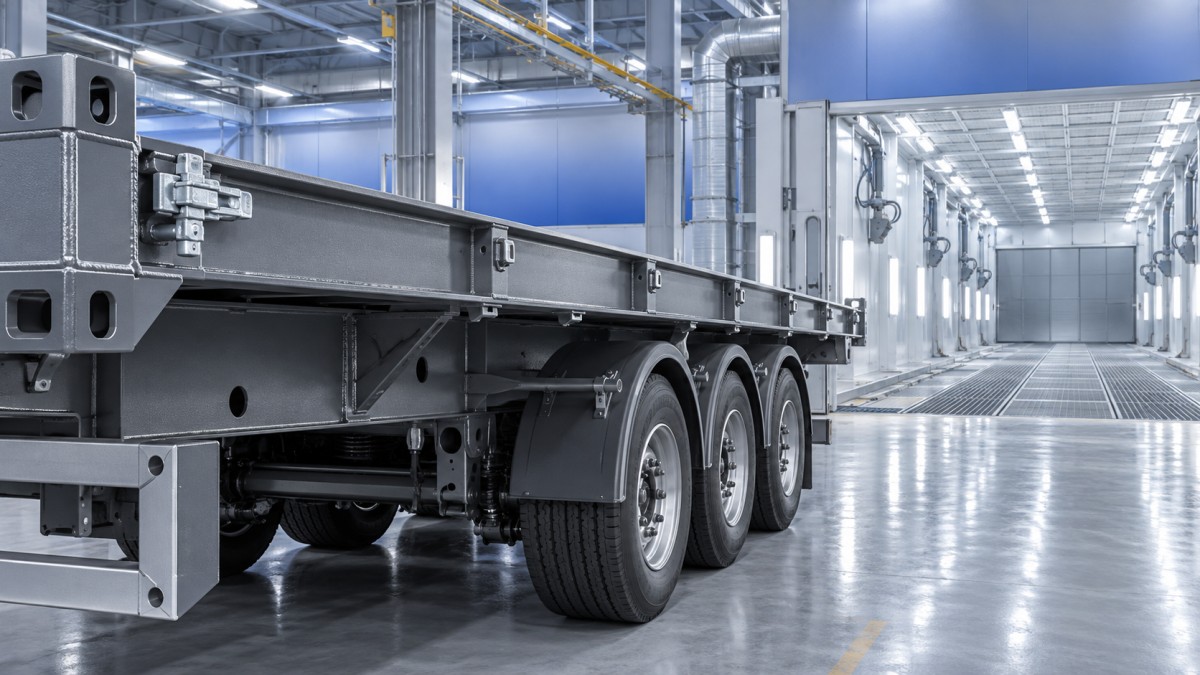
Large chassis rails are visible and easy to repaint. The harder corrosion problem sits in details: lap joints, gussets, suspension hangers, toolboxes, air reservoirs, deck pockets, rear bumper interfaces, and the underside of cross-members. A trailer manufacturer with strong corrosion practice considers these features during design and fabrication, not only during finishing.
For example, drainage holes need to be placed where water can actually escape, remain open after painting, and avoid weakening highly stressed sections. Closed or boxed structures require particular care. If moisture enters through a damaged seam, fastener opening, or incomplete weld and has no escape path, corrosion can progress internally without obvious external warning.
Welding quality matters for the same reason. Continuous sealing where it is appropriate can prevent crevices, while poorly finished welds may retain moisture and make coating coverage uneven. At the same time, sealing every joint indiscriminately is not a substitute for good design; it can conceal areas that remain difficult to inspect or repair. Evaluators should look for deliberate drainage, accessible inspection points, clean weld finishing, and protection around attachments added after the main frame has been coated.
Flatbeds require attention to deck-related damage
Open-deck trailers experience a specific corrosion pattern because their working surfaces are frequently struck, scraped, loaded, and exposed. Chains, binders, forklift contact, steel coils, machinery tracks, and loose cargo can damage paint faster than weather alone. A coating system that remains attractive on the side rail may still fail around stake pockets, lashing points, container locks, and the deck-to-frame interface.
A 40-ton 3 Axle Flatbed Trailer, for example, is intended for heavy or irregular loads such as equipment, machinery, and steel products. Its corrosion assessment should include the exposed platform and load-securing hardware as well as the three-axle chassis. With 12 container lockers and a leaf-spring suspension, there are multiple local areas where abrasion, debris retention, and moisture can affect the finish. The relevant question is whether those high-contact locations can be inspected and repaired easily after normal use.
For this type of equipment, a buyer should also clarify whether timber deck treatment, steel deck coating, container-lock protection, and underside coverage are included in the standard build or offered as separate options. “Painted trailer” is not a sufficiently precise description when the trailer's revenue depends on repeated loading and unloading of abrasive cargo.
Compare the repair strategy before comparing the warranty language
Even a well-protected trailer will eventually receive paint damage. The commercial difference lies in how easily the fleet can find it, stop it, and restore protection before corrosion spreads. A manufacturer that uses a coating system available only through a distant factory may create avoidable maintenance friction. A practical system should have a clear touch-up procedure, compatible materials, and accessible areas for local repair.
Warranty terms deserve attention, but they should not be treated as proof of protection quality. Corrosion warranties often depend on exclusions related to impact damage, poor maintenance, chemical exposure, unreported defects, or modifications. Those exclusions can be reasonable because corrosion has many operating causes. The more useful procurement exercise is to document the expected service environment and obtain a build specification that addresses it.
Ask the manufacturer to identify which areas receive protection after final assembly, how damaged paint should be repaired, and whether the coating approach changes for coastal, mining, agricultural, or chemical-exposure routes. A supplier that answers with component-level detail gives the evaluator a more usable basis for lifecycle planning than one that offers only a broad durability claim.
Build the corrosion requirement into the purchase specification
Evaluators often compare trailers using axle rating, payload, dimensions, suspension, and delivery price, then leave corrosion protection as a standard-finish assumption. That creates a gap between the purchase order and the operating reality. The better approach is to classify the trailer's corrosion exposure before requesting quotations: dry inland, wet and dirty construction work, coastal transport, winter salt exposure, chemical-adjacent operation, or mixed duty.
Then request a written response covering surface preparation, coating layers, treatment of welds and enclosed sections, drainage design, protection of high-wear areas, inspection records, and field repair guidance. The objective is not to demand the most expensive coating on every unit. It is to prevent a mild-duty paint specification from being applied to a severe-duty fleet simply because the trailers looked acceptable at handover.
Corrosion protection practices vary because manufacturers make different choices in process control, design detail, coating specification, and option management. For long-term fleet investment, the strongest indicator is whether those choices are documented against the trailer's working environment and the locations where damage is most likely to begin.
Leave A Reply

First class quality service and professional after-sales team.
Get in Touch
*We respect your confidentiality and all information are protected.