





Flatbed Trailer Supplier Trends: Lighter Decks, Higher Payloads
As the transport industry pushes for better efficiency, every flatbed trailer supplier is adapting to a clear market shift: lighter deck structures that support higher payloads without compromising durability.
For buyers researching heavy-duty hauling solutions, the main question is simple: can a lighter trailer really carry more while staying reliable in daily use?
The short answer is yes, but only when weight reduction comes from sound engineering, material selection, and manufacturing quality rather than cost-cutting shortcuts.
What buyers are really looking for from a flatbed trailer supplier
Most information-stage buyers are not just comparing dimensions or listed payload ratings. They want to understand which design trends improve operating economics without increasing maintenance risk.
That makes today’s leading flatbed trailer supplier stand out through practical performance factors: tare weight, frame strength, deck durability, axle matching, corrosion resistance, and lifecycle cost.
For fleet owners, distributors, and project transport users, the value of a lighter trailer is clear. Lower self-weight allows more legal cargo capacity and can improve route efficiency.
However, lighter does not automatically mean better. If material thickness, cross-member spacing, or weld quality are poorly managed, payload gains can be offset by faster structural fatigue.
Why lighter decks are becoming a major market trend
Transport companies across Africa, Southeast Asia, and Central Asia are under pressure to move more goods per trip while managing fuel prices, road conditions, and regulatory weight limits.
As a result, flatbed trailer suppliers are redesigning decks and chassis structures to remove unnecessary mass while preserving the strength needed for steel coils, machinery, timber, and construction cargo.
Common approaches include high-strength steel applications, optimized beam geometry, improved deck layout, and better load distribution between axles and the main frame.
These changes reduce trailer dead weight without sacrificing the ability to handle concentrated loads, repeated loading cycles, or long-distance freight operations on mixed-quality roads.
How higher payloads create real business value
For many buyers, higher payload is not only a technical feature. It directly affects trip profitability, equipment utilization, and transport cost per ton.
If a trailer can legally carry more cargo each run, the operator may reduce total trips, lower fuel consumption per delivered unit, and improve revenue potential over time.
That is why payload-focused design has become a competitive point for any serious flatbed trailer supplier. Buyers want measurable gains, not just brochure claims.
In related trailer segments, lightweight material strategies are already proving their value. For example, Aluminum Tanker Trailer solutions show how high-strength aluminum alloy can reduce weight, improve corrosion resistance, and increase operational economy.
Although tanker and flatbed applications differ, the market logic is similar: smart structural design can increase payload and fuel efficiency while supporting safe, reliable transport performance.
What to check before trusting lightweight trailer claims
When evaluating a flatbed trailer supplier, buyers should look beyond headline payload figures. The first priority is understanding how the trailer achieved its lower weight.
Ask about steel grade, main beam design, cross-member arrangement, suspension matching, and deck plate specifications. These details reveal whether the trailer is engineered or merely simplified.
Manufacturing capability also matters. CNC cutting accuracy, automatic welding consistency, and bending precision all affect structural reliability and dimensional stability in real operation.
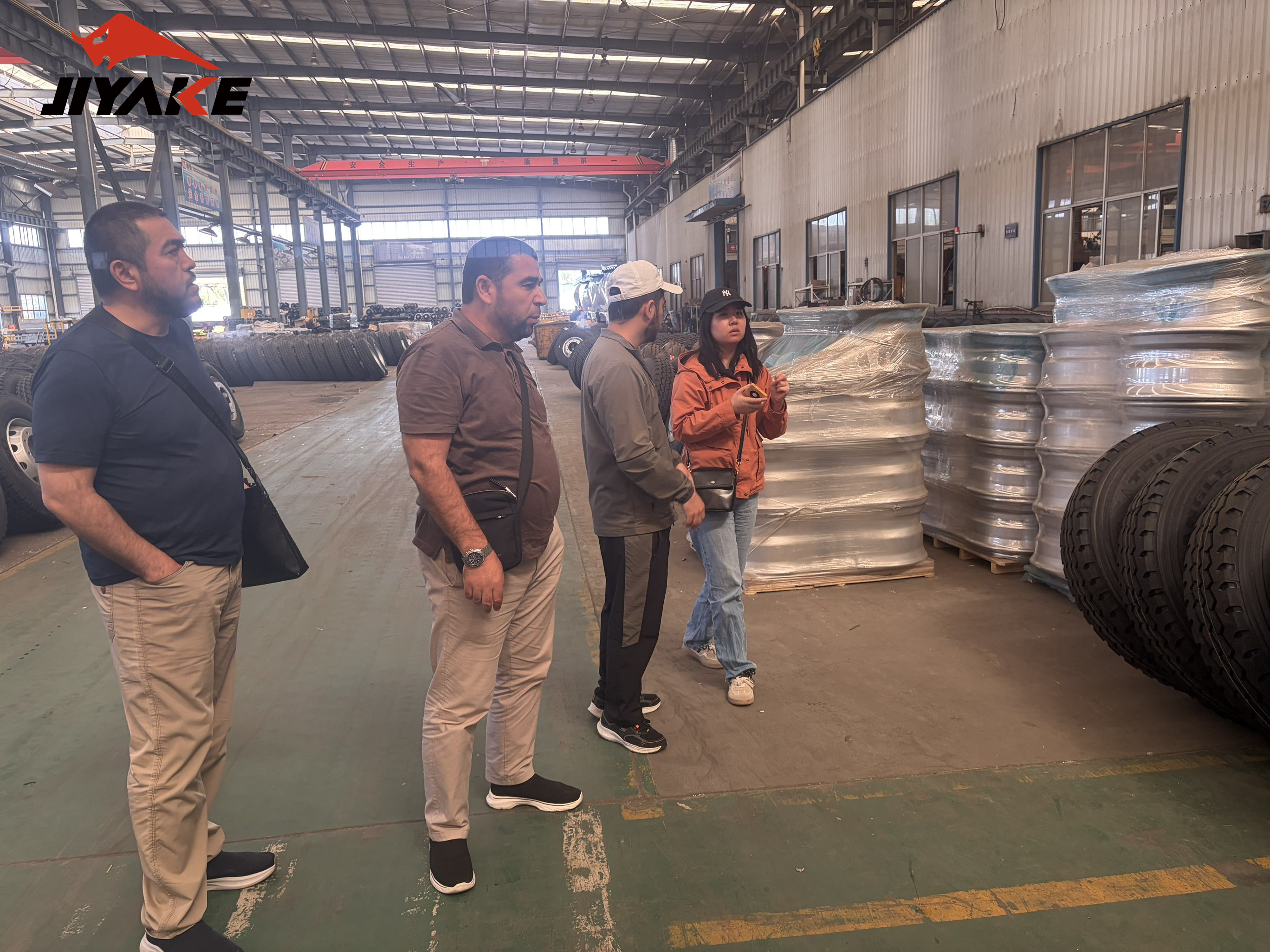
Shandong Jiyake Automobile Sales Co., Ltd., as a full-size modified truck and trailer enterprise, supports global customers with semi-trailers and special vehicles backed by large-scale production facilities and integrated manufacturing resources.
With products serving more than 60 countries and production supported by advanced cutting, welding, and forming equipment, such capabilities help buyers assess consistency, scalability, and product support.
Which lightweight design features usually matter most
Not every specification carries equal importance. Buyers should focus first on the parts that most strongly influence durability under load and long-term maintenance costs.
Main beam structure is critical because it bears the largest share of stress. A lighter deck means little if the beam design cannot support torsion and repeated heavy loading.
Deck material and layout matter next. Different cargo types create different pressure patterns, so a trailer for machinery may require a different deck strategy than one for bagged or palletized goods.
Suspension and axle configuration should also match expected road conditions. Higher payloads create little value if uneven roads quickly damage tires, bushings, or frame connections.
Finally, corrosion protection remains essential, especially in humid, coastal, or chemically exposed operating environments. Weight savings should never come at the cost of shorter service life.
How information-stage buyers can compare suppliers more effectively
At the research stage, the best approach is to compare suppliers using a practical checklist instead of relying on sales language alone.
Review whether the supplier explains design logic clearly, provides application-specific recommendations, and demonstrates export or service experience in regions similar to yours.
Also compare warranty support, spare parts availability, production capacity, and the ability to customize dimensions or load configurations for your cargo profile.
A dependable flatbed trailer supplier should be able to explain not only what the trailer weighs, but why it weighs that amount and how that choice supports safe payload growth.
Conclusion: lighter trailers are valuable when engineering comes first
The trend toward lighter decks and higher payloads is real, and for many operators it offers meaningful gains in efficiency, fuel economy, and freight profitability.
But the best buying decision comes from separating true engineering improvements from superficial lightweight claims. Buyers should evaluate structure, materials, manufacturing, and service support together.
In today’s market, the right flatbed trailer supplier is not simply the one offering the lightest trailer, but the one delivering the best balance of payload, durability, and long-term operating value.
Leave A Reply

First class quality service and professional after-sales team.
Get in Touch
*We respect your confidentiality and all information are protected.