





Fence cargo trailer or flatbed for palletized freight?
For palletized freight, a flatbed is often the better choice when loading speed, unrestricted side access, and flexibility for different cargo types matter most. A fence cargo trailer is worth considering when pallets benefit from a physical side boundary and the loading sites can accommodate its gates or panels. Neither design eliminates the need for a cargo-specific securing plan.
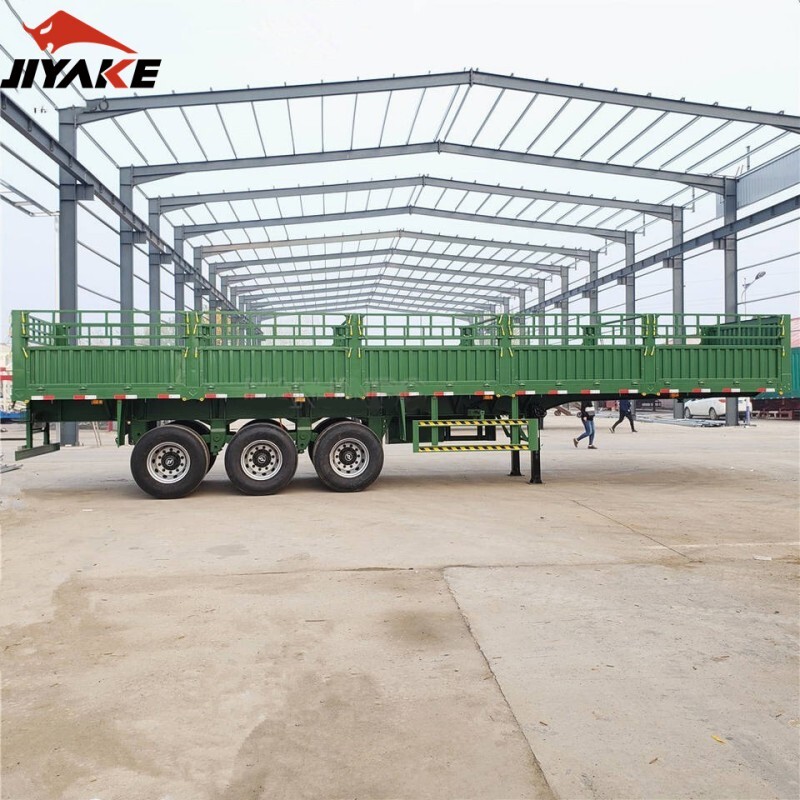
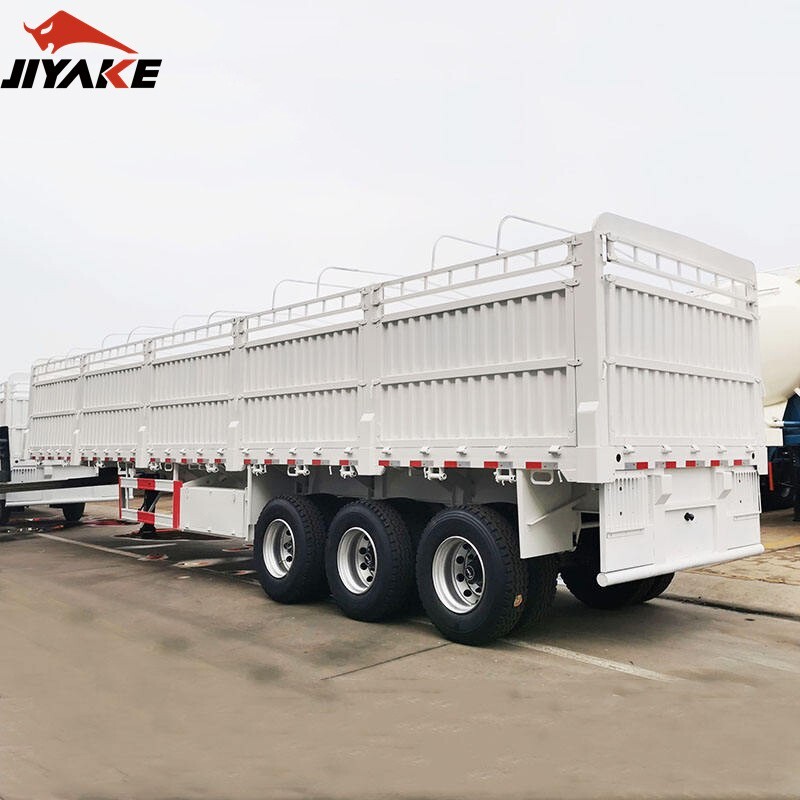
The decision is less about whether the freight is palletized than about how stable each pallet is, how it will be loaded, and what happens to the load during braking, cornering, and travel over uneven roads. When evaluating a Fence Cargo Trailer for sale against a flatbed, the useful comparison is the complete operating setup: deck, side structure, restraint equipment, loading facilities, and route requirements.
What the fence changes—and what it does not
A fence cargo trailer has side structures that create a boundary around the deck. Depending on its design, these may consist of removable panels, gates, stakes, or a combination of components. They can help contain loose packaging or provide a secondary barrier if part of a load shifts. They may also make it easier to keep pallets positioned within the deck perimeter during loading.
That boundary should not be treated as an automatic substitute for rated load restraints. Fence panels and posts vary in strength, height, spacing, and attachment method. Unless the manufacturer specifies that the structure is designed and rated to restrain the relevant cargo forces, it should not be assumed capable of holding a loaded pallet during hard braking or a sudden maneuver.
A flatbed has no permanent side enclosure in the basic configuration. Pallets are more exposed, but the open deck gives operators direct access to the load and its restraint points. A well-secured load on a flatbed can be more appropriate than a poorly secured load behind fence panels. The important question is whether the trailer and its securing equipment can control movement in every required direction.
Start with the pallet, not the trailer category
A uniform pallet of tightly wrapped, interlocked cartons behaves differently from a pallet carrying tall drums, bagged material, or unstable individual packages. Shrink wrap may hold cartons together for handling, but it is not necessarily sufficient to restrain the palletized unit on the road. Similarly, the condition of the pallet matters: damaged boards, protruding nails, or weak construction can compromise both forklift handling and restraint placement.
Assess the weight and dimensions of each loaded pallet, its center of gravity, and whether the packaging can tolerate pressure from straps. Tall loads with a high center of gravity need particular attention because they can tip even when their bases do not slide. Edge protectors, blocking, suitable friction materials, or alternative restraint arrangements may be needed, depending on the freight and applicable rules.
For stable, consistently sized pallet loads, a flatbed can work well when the shipper can apply and inspect restraints efficiently. A fence trailer becomes more attractive where packaging is prone to shedding smaller items or where a side boundary offers useful secondary containment. If the goods are highly sensitive to rain, dust, or theft, however, neither an open flatbed nor an open-top fence trailer should be assumed to provide adequate protection. A suitable cover or an enclosed trailer may be necessary.
Loading access can outweigh the benefit of sides
Compare the actual loading sequence at both ends of the route. On an open flatbed, a forklift can generally approach from either side, subject to site layout and safe lifting capacity. This can simplify the placement of pallets across the deck and allow individual pallets to be removed without moving others.
A fence trailer may provide similar access if its side sections open or are removable, but that depends on the design. Gates, hinges, posts, and latches can restrict forklift reach or reduce the size of the opening. Removable components also need a safe place to be handled and stored while loading. If access is limited to the rear, pallets may have to be loaded in a particular sequence, and unloading an intermediate delivery can become more labor-intensive.
The available opening is not necessarily equal to the stated deck length or width. Check the clear distance between posts, the usable height beneath any fixed structure, and the space needed for forklift tines and load backrests. Where freight is loaded by crane, overhead access and the position of lifting slings are also important. These details affect turnaround time and the risk of damage to packaging or trailer fittings.
For mixed operations, open-deck flexibility may have additional value. A trailer such as the 4 Axle Flatbed Trailer illustrates an open platform intended for freight that can include heavy or irregular loads as well as palletized cargo. Its published information lists a 12,500 mm by 2,500 mm deck dimension and a 40-ton loading capacity, but also describes a three-axle arrangement despite the product title. Axle configuration, usable payload, deck dimensions, and legal operating limits should therefore be confirmed against the final specification before assessing suitability.
Payload and pallet positions are different constraints
A trailer can have enough space for the planned number of pallets but lack sufficient legal payload for their combined weight. The reverse is also possible: light, bulky pallets can fill the deck before the weight limit is reached. Fence structures add their own weight, which can reduce the payload available for freight compared with an otherwise equivalent flatbed. The actual difference depends on the construction of the two trailers.
Calculate payload using the complete combination, including tractor, trailer, fuel, driver, securing equipment, and any removable sides or covers. Then check axle loads as well as gross combination weight. Concentrating heavy pallets near one end can overload an axle group even when the total shipment weight is within the legal limit. Deck strength and permitted concentrated loads matter too, particularly for small, heavy pallets or equipment bases.
For a fair comparison, use the same representative shipment on each candidate trailer: count usable pallet positions, allow for restraint clearance, and check the resulting weight distribution. This is more meaningful than comparing nominal capacity figures alone.
Account for securing time and operating costs
The purchase price is only one part of the decision. Fence trailers introduce components such as panels, posts, hinges, and latches that need inspection and maintenance. Their additional weight can affect payload and fuel consumption, while damaged or missing sections can disrupt the intended loading arrangement.
A flatbed avoids much of that side-structure hardware, but it still requires an appropriate investment in restraints, anchor points, edge protection, and driver time. The number and rating of anchor points, their position relative to pallet rows, and the ease of inspection can have a direct effect on loading time. A side panel that prevents workers from reaching a tie-down point may make a fence trailer slower to secure even when it provides useful containment.
Compare costs over a representative duty cycle rather than assuming one design is inherently cheaper. Include loading and unloading time, restraint equipment, maintenance, payload lost to trailer weight, and the operational effect of rejected or delayed loads. If a trailer carries different commodities on outbound and return trips, the value of open-deck access should be considered alongside the protection offered by sides.
Choose against the most demanding regular load
For repeat shipments of stable pallets between sites with efficient side-loading access, a flatbed is a strong starting point, provided the load can be restrained and protected adequately. It is particularly useful where return loads vary in shape or require crane access.
A fence trailer is more compelling when the freight regularly benefits from secondary side containment, the panels do not obstruct handling, and the weight of the side structure does not materially reduce the required payload. Before committing, obtain the side-structure and anchor-point ratings, confirm the loading openings, and agree on a securing arrangement for the heaviest and least stable regular shipment. Applicable cargo-securement, dimension, and axle-weight requirements should be checked for every jurisdiction on the intended route.
Leave A Reply

First class quality service and professional after-sales team.
Get in Touch
*We respect your confidentiality and all information are protected.