




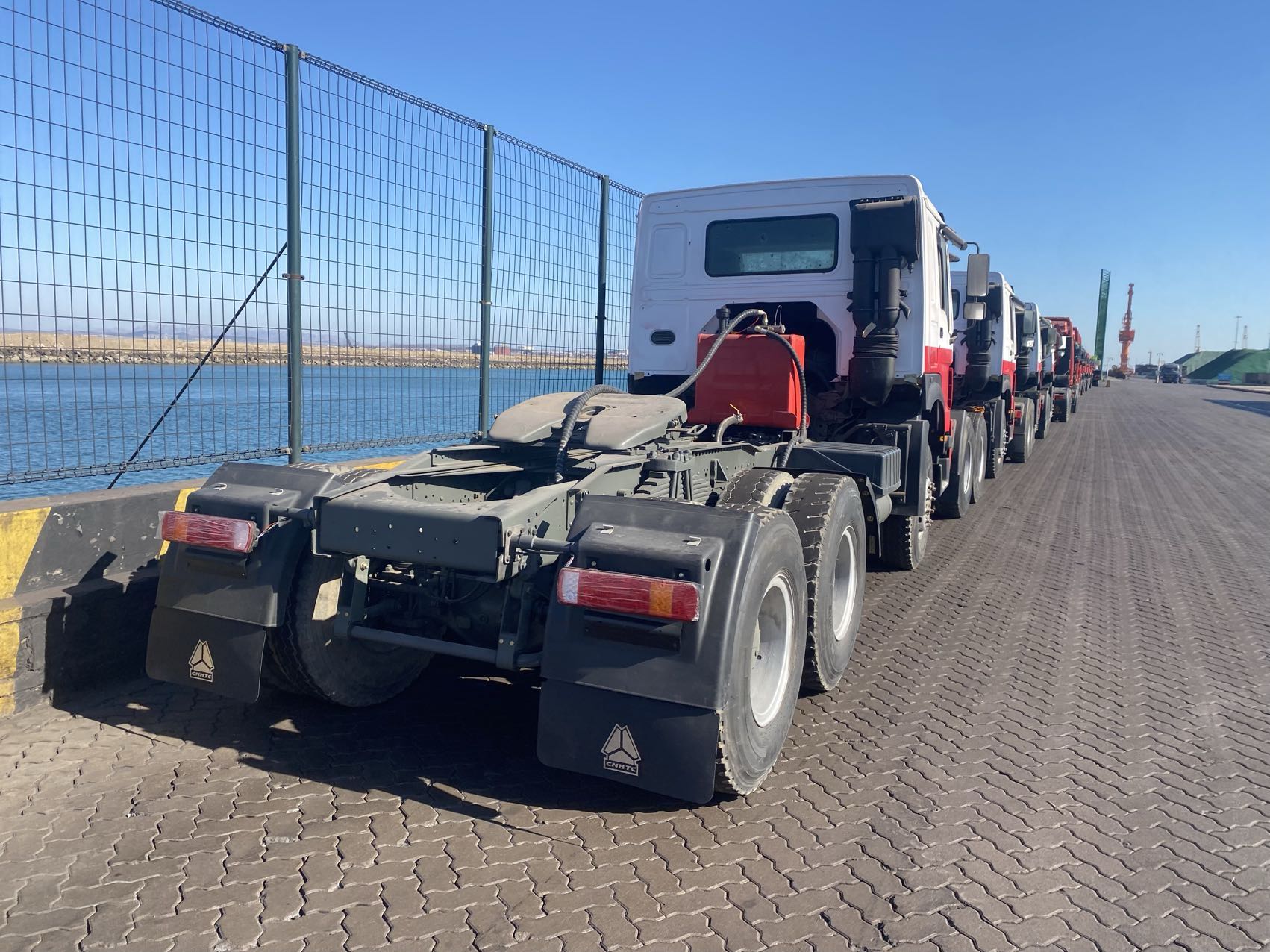

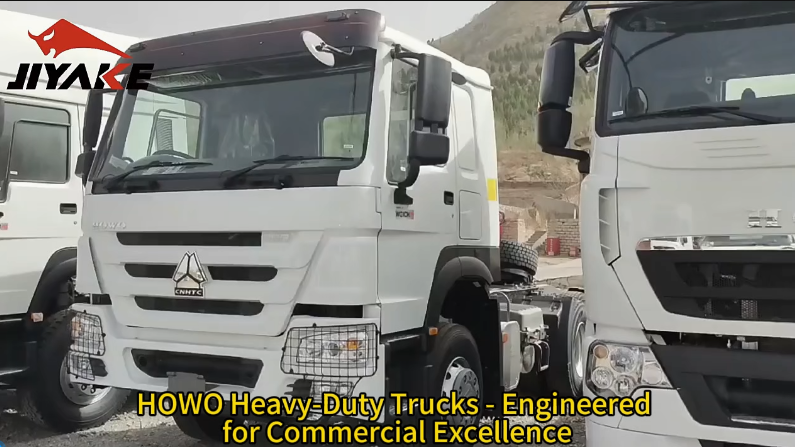
Common Tractor Truck Spec Errors That Raise Operating Costs
Why Tractor Truck Spec Errors Cost More Than They First Appear
When evaluating a Tractor Truck purchase, small specification mistakes often create big downstream costs. Fuel burn rises, tire wear speeds up, uptime drops, and resale value weakens.
That is why a Tractor Truck should never be judged by engine power alone. Real operating cost depends on how the full configuration matches route, load, road condition, and duty cycle.
Shandong Jiyake Automobile Sales Co., Ltd. supports fleets in over 60 countries with semi-trailers, tractor trucks, dump trucks, tankers, and other special vehicles, backed by large-scale production and fabrication capability.
The Spec Mistakes That Commonly Raise Tractor Truck Operating Costs
- Choosing too much engine for the job can hurt a Tractor Truck’s fuel economy. If payloads and terrain are moderate, oversized horsepower may add cost without improving real transport efficiency.
- Choosing too little engine is just as costly. The Tractor Truck runs harder, shifts more often, climbs slower, and may suffer faster drivetrain wear under repeated heavy-load operation.
- A mismatched gear ratio often hides inside the quotation sheet. On a Tractor Truck, wrong ratios can increase fuel use, reduce gradeability, and make highway cruising less efficient.
- An unsuitable axle rating creates long-term risk. If the Tractor Truck regularly carries loads near the upper limit, under-spec axles usually mean more repairs and shorter component life.
- Ignoring wheelbase impact is a common oversight. A Tractor Truck with the wrong wheelbase may lose maneuverability in yards or become less stable on uneven roads and heavy-haul routes.
- Fuel tank capacity is often treated as a minor detail. In remote areas, an undersized tank can force inefficient refueling stops and reduce scheduling flexibility for the Tractor Truck.
- Tire selection is not just a replacement issue. The wrong tire type on a Tractor Truck can raise rolling resistance, reduce traction, and increase wear on poor road surfaces.
- Ground clearance matters more than many buyers expect. A Tractor Truck operating on mining roads or rough construction access routes can suffer underbody damage if clearance is too low.
What to Check Before Approving a Tractor Truck Configuration
A useful review starts with the real route profile, not the brochure. Look at average payload, slope, road quality, stop frequency, climate, and average daily distance.
Then compare those conditions against key specification points. This helps separate a low purchase price from a genuinely low total operating cost.
Highway freight
For highway use, a Tractor Truck should prioritize fuel economy, cruising efficiency, and stable gearing. Too aggressive an axle ratio often pushes engine speed higher than necessary.
Check tank range carefully. Long-distance lanes with uneven fuel access can turn a cheap spec into a scheduling problem very quickly.
Mining and rough-road duty
In mining or broken-road service, the Tractor Truck must handle shock, grade, and dust. Here, reinforced axles, durable suspension, and higher ground clearance matter more than brochure speed.
A related example is the Shacman Dump Truck, built for extreme-duty operations with a reinforced frame, WP10.290 engine, FULLER 9JS135 transmission, and strong off-road suitability.
Small Details That Often Get Missed in a Tractor Truck Review
- Do not skip turning radius data. A Tractor Truck that looks efficient on paper may lose time every day if it struggles in ports, depots, site entries, or loading zones.
- Cab design affects cost more than expected. Poor visibility, weak seat support, and difficult controls can reduce driver consistency and raise incident or maintenance risk over time.
- Check clutch and driveline durability for the duty cycle. Frequent starts, gradients, and overload exposure can quickly punish components that are only adequate on standard road work.
- Approach and departure angles matter on uneven ground. A Tractor Truck used around ramps, pits, or rough entries can suffer repeated contact damage if these angles are overlooked.
- Look beyond headline fuel figures. A Tractor Truck may show attractive test consumption, but real costs depend on speed, terrain, load factor, idle time, and maintenance discipline.
Using Comparable Heavy-Duty Specs as a Reality Check
When reviewing a Tractor Truck, it helps to compare against proven heavy-duty platforms. For example, a vehicle using an F2000 cab, 7.5-ton front axle, and reinforced 13-ton rear axle signals a durability-focused setup.
Other practical indicators include 314 mm ground clearance, an 18 m turning circle, and a 300 L fuel tank. Specs like these reveal whether the design truly fits demanding field conditions.
This does not mean every Tractor Truck needs the heaviest configuration. It means every major spec should be defended by actual operating conditions, not assumptions.
A Simple Way to Make the Final Decision
Before approval, test each Tractor Truck option against five questions: Is the power right, is the axle margin safe, is the gearing efficient, is the chassis suitable, and is service support realistic?
If one answer is unclear, the operating cost picture is also unclear. That is usually where hidden cost starts.
A good Tractor Truck decision is rarely the cheapest quote. It is the configuration that keeps fuel use controlled, maintenance predictable, and uptime strong across the full service life.
Use the specification sheet as a cost-control tool, not just a compliance document. That shift alone can lead to better fleet value and a more reliable investment outcome.
Leave A Reply

First class quality service and professional after-sales team.
Get in Touch
*We respect your confidentiality and all information are protected.