




Lowbed Semi Trailer Exporter Checklist for Heavy Equipment Projects
Choosing a reliable lowbed semi trailer exporter is critical for heavy equipment projects where timing, safety, and load performance directly affect results. As global project demands grow, project managers need a practical checklist to evaluate manufacturing strength, export experience, product quality, and after-sales support before making a decision.
What should project managers check first when evaluating a lowbed semi trailer exporter?
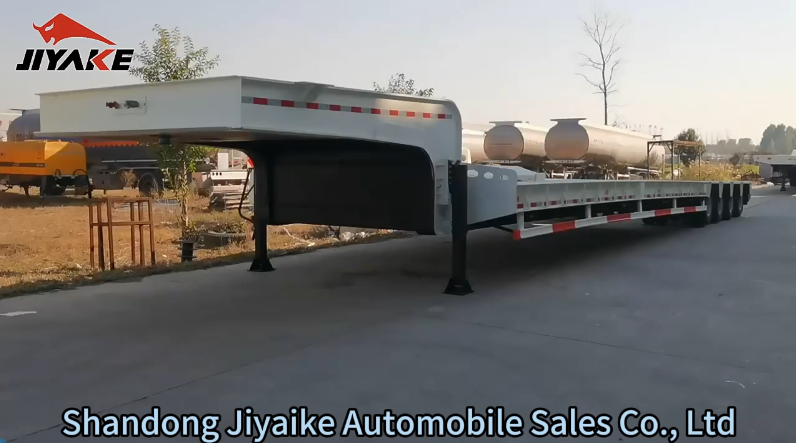
For engineering transport, a lowbed semi trailer exporter is not only a supplier. The exporter directly influences equipment loading safety, border clearance efficiency, delivery timing, maintenance planning, and long-term operating cost.
Project managers usually face the same pressure points: limited procurement time, uncertain road conditions, heavy excavator or bulldozer dimensions, and strict site mobilization deadlines. A weak exporter can create delays far beyond the trailer purchase itself.
A practical first review should focus on the following areas:
- Manufacturing capacity, including cutting, welding, bending, and assembly capability for heavy-duty trailers.
- Export familiarity with destination regions such as Southeast Asia, Central Asia, and Africa, where road conditions and documentation requirements vary widely.
- Technical matching between trailer design and the actual machines to be transported, including axle load, deck height, suspension, and ramp structure.
- After-sales responsiveness, especially spare parts coordination, remote technical support, and pre-shipment inspection communication.
Shandong Jiyake Automobile Sales Co., Ltd. operates as a full-size modified truck enterprise integrating design, research, production, and sales. With subsidiaries covering vehicle production, trade, and fittings, its structure supports more stable coordination for heavy transport equipment projects.
A decision checklist for selecting the right lowbed semi trailer exporter
Before comparing quotations, project teams should apply a structured screening method. This helps remove suppliers that look competitive on price but lack production depth or export execution discipline.
The table below summarizes the main evaluation points for a lowbed semi trailer exporter in heavy equipment projects.
This checklist matters because project losses usually come from hidden execution gaps rather than headline price. A dependable lowbed semi trailer exporter should show evidence across all five dimensions, not just one strong sales presentation.
Key questions to ask before issuing a purchase order
- What machine models, operating weights, and track or tire widths will be transported?
- Will the trailer work on paved roads only, or also on mining roads, construction detours, and uneven access routes?
- Does the supplier recommend a standard lowbed design or a customized solution for axle distribution and ramp access?
- What is the realistic production lead time, and what checkpoints are available before shipment?
- Which spare parts should be shipped together to reduce early-stage maintenance risk?
How manufacturing strength affects trailer reliability and delivery confidence
A lowbed semi trailer exporter with real factory depth can control quality better than a trading-only operation with limited production visibility. In heavy transport, weld quality, frame alignment, and steel processing discipline have direct consequences for service life.
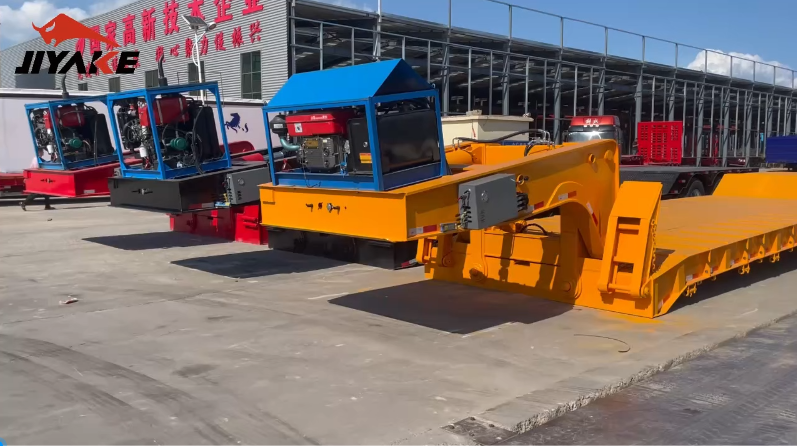
Shandong Jiyake Automobile Sales Co., Ltd. covers 300000 square meters and has about 500 employees. The factory is equipped with CNC cutting machines, automatic welding machines, large bending machines, canning machines, and tank automatic welding equipment. For project buyers, this signals stronger process control and broader product integration across semi-trailers and special vehicles.
This manufacturing base is also useful when projects require related transport solutions beyond lowbed units. In many engineering programs, teams may need side wall trailers, dump trucks, tanker equipment, or tractor trucks as part of a wider logistics package.
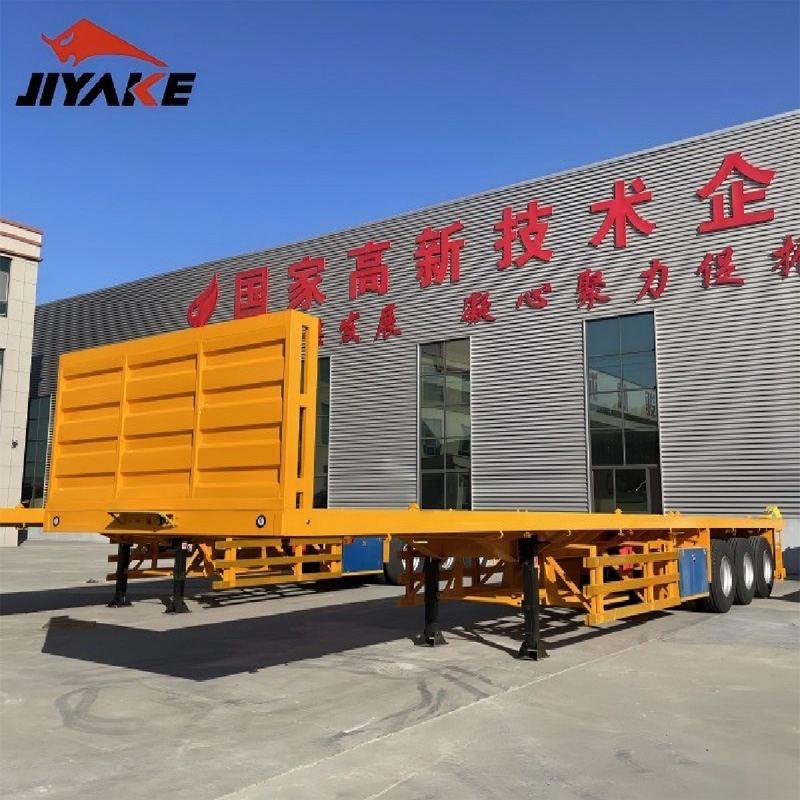
For example, when a project also handles lightweight bulk cargo, daily necessities, or containerized support materials, a complementary option such as Side Wall Semi Trailer can improve fleet utilization instead of relying on one trailer type for every task.
What technical points should be reviewed for heavy equipment transport?
The best lowbed semi trailer exporter should not start with price. The process should begin with transport conditions, equipment dimensions, route limitations, and unloading frequency. Technical mismatch is one of the most common procurement mistakes.
Project managers should evaluate the following technical points:
- Rated payload versus actual operating weight of excavators, rollers, graders, or drilling rigs.
- Deck height and loading angle, which affect safety for tracked machines and low-clearance equipment.
- Axle arrangement and suspension type, especially when roads include rough construction access segments.
- Tire specification and service access in the destination market.
- King pin selection, landing gear strength, and side protection details for compliance and handling stability.
The following table helps procurement teams compare core selection factors.
Even when the article focus is a lowbed semi trailer exporter, buyers often review adjacent trailer specifications to judge engineering capability. A side wall configuration, for instance, may use high-strength steel, a 3 axle 13 ton FUWA arrangement, mechanical leaf spring suspension, 12R22.5 tubeless tires, 28 ton landing gear, LED side marker lamps, and payload options relevant to diversified project logistics. Such detail usually reflects whether a manufacturer can communicate clearly on structure and application fit.
How to compare exporters beyond price alone
Price matters, but project managers should compare exporters through total execution value. The lowest quotation may exclude stronger steel selection, inspection transparency, shipping preparation, or spare parts support.
Use this comparison logic when assessing a lowbed semi trailer exporter:
- Compare quoted configuration line by line instead of comparing only total amount.
- Ask whether the exporter has experience serving countries with hot climates, rough roads, and overloaded local logistics practices.
- Check whether inspection photos, welding details, and dimensional confirmations are shared before shipment.
- Review whether the exporter can support mixed procurement of trailers and related special vehicles under one communication window.
Because Shandong Jiyake Automobile Sales Co., Ltd. serves more than 60 countries, including Southeast Asia, Central Asia, and Africa, the company is positioned to understand route diversity, practical durability concerns, and export coordination needs common in cross-border heavy equipment projects.
Common mistakes when choosing a lowbed semi trailer exporter
Mistake 1: Buying for maximum nominal payload only
Some buyers focus on headline tonnage and ignore center of gravity, machine length, axle spacing, and local route restrictions. A trailer that looks stronger on paper may be less practical on the actual jobsite network.
Mistake 2: Ignoring after-sales parts planning
A delayed project often suffers more from unavailable parts than from the original purchase price. Tires, suspension wear items, lamps, and landing gear components should be discussed before dispatch.
Mistake 3: Treating all exporters as technically equal
A capable lowbed semi trailer exporter asks about the machine, route, climate, legal loading context, and unloading pattern. A weak one sends a generic quotation without engineering clarification.
FAQ for project procurement teams
How do I know if a lowbed trailer should be customized?
Customization is usually needed when machine dimensions are unusual, road access is poor, or the project requires repeated transport of multiple equipment types. Ramp layout, deck length, axle setup, and reinforcement details may need adjustment.
What documents should a lowbed semi trailer exporter prepare for export?
At minimum, buyers should confirm commercial invoice, packing list, transport-related product details, and any destination-specific compliance or customs documents required by the importing country. Exact requirements depend on the market and shipping mode.
How long does production usually take?
Lead time depends on configuration complexity, order quantity, and current factory schedule. The better approach is to request milestone visibility: drawing confirmation, material preparation, fabrication progress, final inspection, and shipment readiness.
Can one supplier support multiple trailer needs in one project?
Yes, and this can simplify communication. For projects moving heavy machinery plus support cargo, a manufacturer with a broad heavy truck and semi-trailer portfolio may help reduce coordination cost and improve consistency in spare parts and service planning.
Why choose us for heavy equipment transport projects
If your team is screening a lowbed semi trailer exporter for an infrastructure, mining, logistics, or construction fleet project, we can support more than a basic quotation. Our strength lies in combining product design, manufacturing resources, export coordination, and multi-vehicle solution capability.
- We can discuss trailer selection based on machine type, load range, route condition, and unloading method.
- We can confirm practical configuration details such as axle arrangement, suspension choice, landing gear, tires, and service parts planning.
- We can communicate estimated delivery cycle, factory production status, and export preparation points before order finalization.
- We can also review whether your project needs additional transport units, including semi-trailers and other special vehicles, for a more efficient fleet plan.
Contact us to discuss parameter confirmation, product selection, delivery schedule, customization scope, destination market requirements, spare parts support, and quotation planning for your next heavy equipment transport project.
Leave A Reply

First class quality service and professional after-sales team.
Get in Touch
*We respect your confidentiality and all information are protected.