




Sourcing From a Qualified Lowbed Semi Trailer Manufacturer
Heavy equipment transport requires specialized machinery engineered to handle immense weight, unusual dimensions, and low clearance constraints. Lowbed semi trailers (also known as lowboys) are the backbone of logistics for construction, mining, agriculture, and industrial manufacturing sectors, offering payload capacities that typically range from 30 tons to over 200 tons.
What Is a Lowbed Semi Trailer?
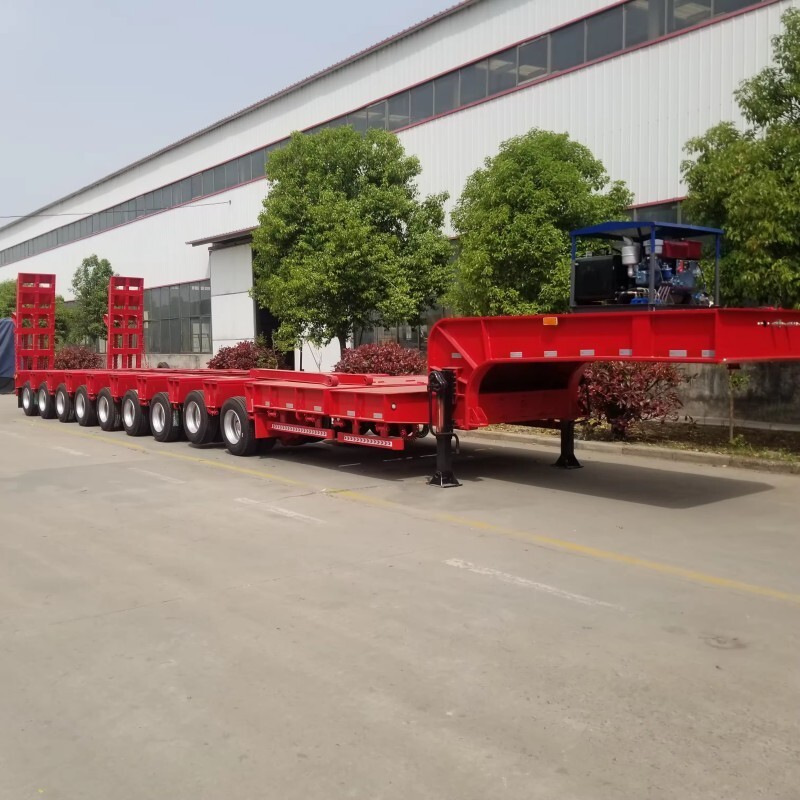
A lowbed semi trailer is a heavy-duty transport trailer designed with a lower cargo deck relative to its wheels. Unlike standard flatbed trailers, the lowbed design positions the main cargo platform much closer to the ground, creating a lower center of gravity and providing additional overhead clearance for tall machinery.
Lowbed trailers come in several primary frame configurations:
Flat Beam / Straight Plate: Features a straightforward structural design suitable for standard heavy hauling.
RGN (Removable Gooseneck): Designed with a detachable front neck, allowing heavy machinery to drive onto the deck directly from the front.
Concave / Drop-Deck: Features a sunken cargo platform that provides the lowest ground clearance available—ideal for ultra-tall or oversized industrial loads.
How Does a Lowbed Trailer Work?
A lowbed trailer works by redistributing heavy localized cargo weights across multiple axles and kingpin connection points connected to a tractor unit.
Loading equipment onto a lowbed trailer depends on its specific neck and ramp design:
Rear Loading: Equipment drives up heavy-duty steel ramps at the back of the trailer.
Front Loading (RGN): The hydraulic gooseneck disconnects from the trailer frame and lowers to the ground, creating a gentle incline ramp for tracks and wheels to climb on from the front.
Once loaded, heavy tie-down D-rings and outriggers secure the cargo to maintain stability over long-distance highway hauls.
What Is the Payload of a Lowbed Trailer?
The payload capacity of a lowbed trailer depends on its structural frame design, steel grade, and axle configuration:
Standard Models: Designed to carry 30 to 120 tons, making them suitable for standard excavators, bulldozers, and wheel loaders.
Heavy-Duty & Modular Models: Equipped with hydraulic multi-axle steering suspensions, these custom trailers reach payload capacities exceeding 200 tons for industrial transformers, turbine components, and massive mining equipment.
Lowbed Trailer Deck Height Guide
Minimizing deck height is crucial for passing under overpasses, low-clearance bridges, and electrical power lines safely.
Standard Lowbed Height: Typically ranges between 850 mm and 1200 mm off the ground.
Drop-Deck / Concave Height: Can lower the cargo plane down to 500 mm to 700 mm above ground level.
Overhead Clearance Advantage: Lowering the deck height allows transporters to carry equipment up to 3.5–4 meters tall while staying within legal roadway height regulations.
2 Axle vs 3 Axle Lowbed Trailer
Choosing between a 2-axle and 3-axle setup comes down to your primary load requirements:
4 Axle Lowbed Trailer vs 8 Axle Lowbed Trailer
For heavy industrial hauling, multi-axle trailers prevent excessive axle loads on public highways:
4 Axle Lowbed Trailers: Engineered for 80 to 100-ton payloads. They provide a balanced solution for moving heavy construction fleets without requiring complex hydraulic steering setups.
8 Axle Lowbed Trailers: Built for extreme payloads of 120 to 180+ tons. These feature multi-line hydraulic steering systems, extending weight distribution over a wide footprint to meet bridge load formulas and prevent road surface damage.
Hydraulic Suspension vs Mechanical Suspension for Lowbed Trailers
Suspension selection dictates off-road capability, tire wear, and cargo safety over rough terrain:
Mechanical Spring Suspension: Highly durable, low maintenance, and cost-effective. Best suited for standard highway transport under moderate payload weights.
Hydraulic Suspension: Provides adjustable ride height, automatic axle load equalization, and superior shock absorption on uneven terrain. Essential for multi-axle heavy haulers carrying 100+ ton concentrated loads.
How to Choose a Lowbed Trailer for Excavator Transport
Selecting the right lowbed trailer to move excavators requires analyzing three main criteria:
Excavator Weight & Track Dimensions: Match the operating weight of your largest excavator against the trailer's rated payload capacity and usable deck length.
Loading Angle Requirements: Tracked excavators need a low climbing angle to prevent slippage. An RGN front-loading trailer offers a lower loading incline compared to steep rear spring ramps.
Outrigger Extensions: Choose side outriggers if you need to extend the effective deck width for wide-track machinery.
How to Transport Heavy Excavators With a Lowbed Trailer
Safely moving heavy excavators across job sites involves a strict operational sequence:
Inspect Loading Surface: Park the lowbed trailer on firm, level ground before loading.
Drive Equipment Slow & Center: Position the excavator slowly onto the main beam center line to maintain balanced weight distribution across all axles.
Lower Attachments: Rest the excavator boom, arm, and bucket flat against the trailer deck surface.
Secure Heavy Tie-Downs: Use high-tensile transport chains and ratchet load binders attached directly to structural D-rings on the trailer frame.
How Much Does a Lowbed Trailer Cost?
Lowbed semi trailer pricing varies based on raw material quality, axle brands, suspension type, and payload capacity:
Basic 2 to 3-Axle Lowbeds: Typically range from $15,000 to $28,000 for standard mechanical setups.
Heavy-Duty RGN Trailers: Range between $30,000 and $55,000 due to the hydraulic neck mechanisms and high-strength steel construction.
Custom Multi-Axle Modular Lowbeds: Exceed $60,000 to $100,000+ for complex hydraulic steering and multi-line axle configurations.
Sourcing From a Qualified Lowbed Semi Trailer Manufacturer
Partnering directly with an experienced Lowbed Semi Trailer Manufacturer ensures custom frame engineering using high-tensile steel (such as Q345B or HG60), certified axle components (FUWA/BPW), and strict quality testing. Factory-direct sourcing provides competitive factory pricing, custom deck configurations, and dedicated aftermarket spare parts support for overseas transport operators.
Leave A Reply

First class quality service and professional after-sales team.
Get in Touch
*We respect your confidentiality and all information are protected.