




What Is a Bulk Cement Trailer and Where Is It Used in Dry Powder Transport?
Meta Title: What Is a Bulk Cement Trailer and Where Is It Used in Dry Powder Transport?
If you are trying to understand what a bulk cement trailer actually does, the short answer is simple: it is a sealed tank trailer built to carry dry powder materials in bulk, then unload them pneumatically without manual handling. In real transport work, that matters because cement, fly ash, lime powder, and similar cargoes are easily contaminated by moisture and hard to discharge efficiently from ordinary dump bodies. A bulk cement trailer is used where clean delivery, low material loss, and fast unloading matter more than simple open-top hauling.
People often picture it as just “a tanker for cement,” but that is only partly right. The shape may look similar to a tank trailer, yet the working logic is different. This equipment is designed for powder flow, air pressure unloading, and dust-controlled transfer into silos. That is why it shows up so often around batching plants, cement terminals, infrastructure projects, dry mortar plants, and industrial powder distribution networks.
What Makes a Bulk Cement Trailer Different?
The key difference is that the cargo is transported in a closed vessel and discharged by compressed air. Instead of tipping the trailer and letting material fall out by gravity alone, the system uses pressure to push powder through pipelines into storage silos. For dry powder transport, that is a practical advantage, not a small technical detail.
In day-to-day operations, this solves three common problems at once:
- It reduces exposure to rain and ambient moisture.
- It cuts product loss caused by spillage and repeated handling.
- It makes unloading at enclosed plant systems much cleaner and faster.
That is also why a standard flatbed, dump truck, or open trailer is not a substitute when the material must stay dry and move directly into a silo. Those vehicles may move bagged cement or aggregates, but they are not the right tool for bulk pneumatic powder delivery.
A useful plain-language definition is this: a bulk cement trailer is a purpose-built semi-trailer used to move dry powder cargo in bulk form and unload it through an air-assisted discharge system.
Where a Bulk Cement Trailer Is Commonly Used
The most obvious application is cement transport from plant to storage site, but that is only one part of the picture. In the heavy truck and trailer business, these trailers are usually selected for repeat routes where powder materials move in volume and unloading points already have silo infrastructure.
Typical use cases include construction supply chains, especially ready-mix concrete plants and precast factories. These operations consume large volumes of cement on a predictable schedule, so bulk delivery is more efficient than relying only on bagged material.
Road, bridge, and large civil works projects also use this trailer type, particularly when there is a temporary or permanent batching setup on site. The same applies to dry mortar manufacturing, lime powder distribution, fly ash handling in industrial systems, and some mining or chemical support operations where non-liquid fine materials must remain sealed during transport.
One thing many first-time buyers miss: the trailer is only part of the system. It works best when the loading station, air compressor setup, pipe connections, and receiving silo are all compatible. A trailer can be well built and still perform poorly if the unloading environment is mismatched.
Not Every Powder Material Should Be Treated the Same
People often search for “bulk cement trailer” when they really mean any powder tanker. In practice, material behavior matters. Cement, fly ash, and lime powder do not flow in exactly the same way. Moisture sensitivity, particle size, bulk density, and tendency to bridge inside the tank all affect trailer choice and unloading performance.
That is why experienced operators ask more specific questions than just payload capacity. They want to know whether the tank design, cone angle, fluidized bed arrangement, piping layout, and compressor setup match the intended cargo. If those details are ignored, discharge speed may slow down, residue may remain in the tank, and maintenance can become a constant issue.
So when someone asks, “Can a bulk cement trailer carry other dry powders?” the realistic answer is: often yes, but not automatically. It depends on the material and the receiving system.
How It Works on the Road and at the Unloading Point
On the road, the trailer behaves like a specialized semi-trailer connected to a tractor unit. At the delivery point, compressed air enters the tank and fluidizes the powder, allowing it to move through the discharge line into a silo. That process is one of the main reasons these trailers are valued in industrial logistics. It lowers manual labor and keeps the product enclosed from loading to discharge.
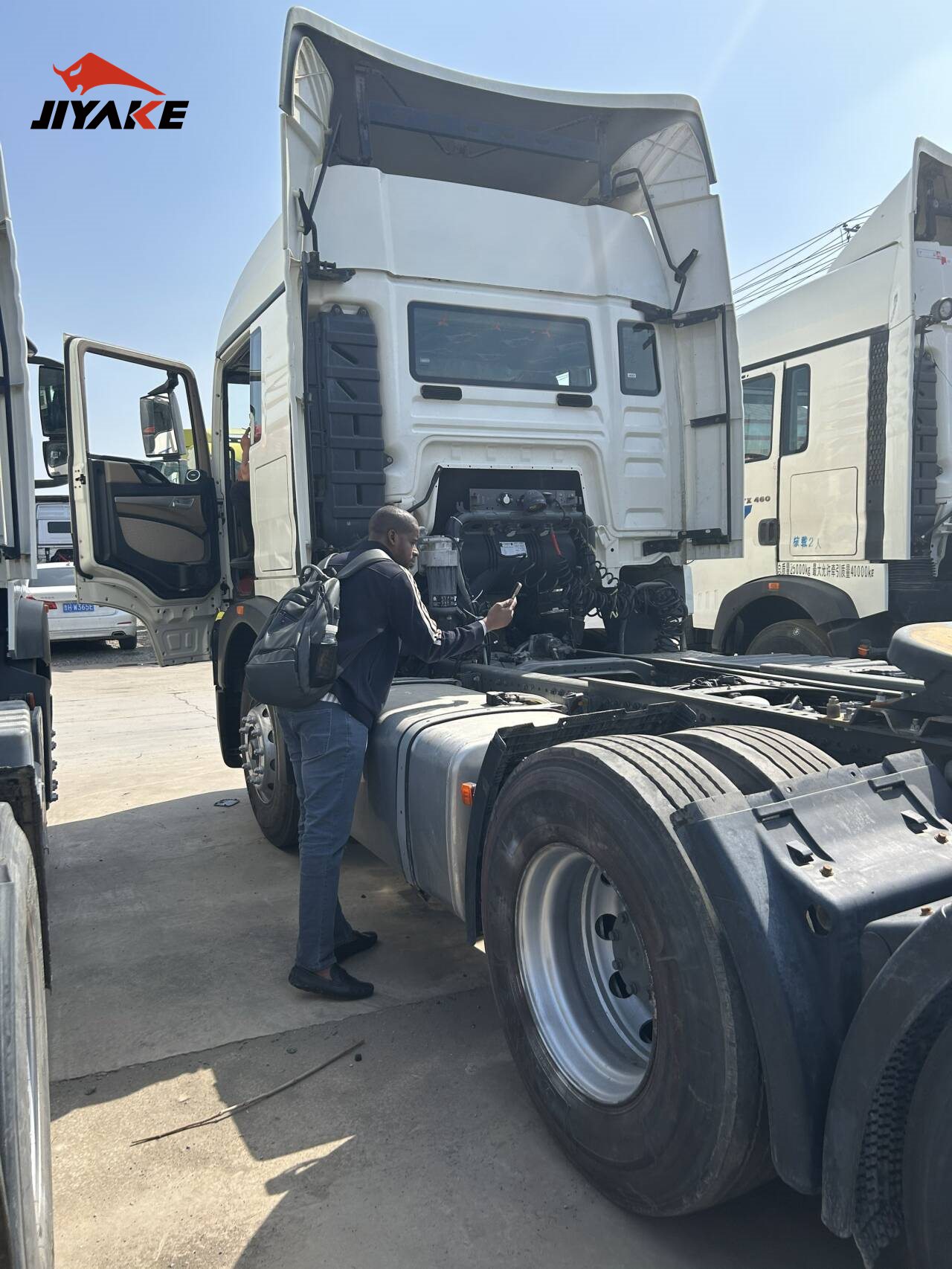
The towing vehicle matters more than some new buyers expect. A powder tanker moving long distance needs stable pulling power, braking confidence, and a chassis that can handle sustained heavy-duty work. In some fleets, a 6x4 Tractor Truck with a high-torque diesel engine, 40-ton load capability, and a dependable brake package is a practical pairing for this kind of semi-trailer work, especially on regional and cross-border routes where road conditions vary.
That pairing is one reason manufacturers with broad special-vehicle experience tend to be more useful partners. Companies such as Shandong Jiyake Automobile Sales Co., Ltd., which produce semi-trailers and other transport equipment across multiple categories, are typically more familiar with how the trailer and tractor unit must work together in real operating conditions, not only on a specification sheet.
Common Misunderstandings Before Choosing One
A very common mistake is focusing only on tank volume. Bigger is not always better. If your route includes weak roads, tight plant access, or axle-load restrictions, an oversized trailer may create more trouble than savings.
Another mistake is assuming all unloading systems perform the same. They do not. Compressor quality, pipe design, sealing, and tank fabrication all affect unloading speed and residue levels. In dry powder transport, poor sealing is not a small defect. It can lead to moisture ingress, dust leakage, product waste, and customer complaints.
There is also the maintenance side. A bulk cement trailer works in dusty conditions, and that means valves, pipelines, air systems, and tank interiors need regular inspection. Buyers who treat it like a simple tank-on-wheels often underestimate long-term upkeep.
When a Bulk Cement Trailer Is the Right Choice
It makes sense when you are moving large quantities of dry powder repeatedly, especially between fixed industrial points such as production plants, silos, and batching facilities. It also makes sense when unloading speed, cargo cleanliness, and reduced labor are part of the operating goal.
It may not be the best fit if your cargo is mostly bagged material, your destination has no silo receiving system, or your delivery pattern is highly irregular and low-volume. In those cases, other transport formats may be more flexible.
For buyers still in the research stage, the smartest next step is not asking only for price. First confirm the material type, route conditions, legal load limits, unloading method, and receiving-site setup. Once those are clear, it becomes much easier to judge the right bulk cement trailer specification and the tractor match behind it.
In practical fleet terms, a bulk cement trailer earns its place when dry powder transport needs to be clean, repeatable, and efficient from loading point to silo discharge. That is where this equipment does its job well, and where a properly matched bulk cement trailer setup starts to pay for itself operationally.
FAQ
Can a bulk cement trailer carry fly ash or lime powder?
Yes, in many cases it can, but compatibility depends on the material’s flow behavior and the trailer’s unloading system.
Is a bulk cement trailer the same as a fuel tanker?
No. They may look similar from a distance, but the structure, sealing, and unloading system are designed for completely different cargo types.
Do I need special unloading equipment at the destination?
Usually yes. These trailers are most effective when the receiving site has a suitable silo and matching pipeline connection.
What matters more: tank size or unloading performance?
For real operations, both matter, but poor unloading performance creates daily inefficiency even if the tank size looks attractive on paper.
Internal Link Anchor Text Suggestions
- bulk powder tanker trailer: product category page
- how to choose a tractor head for semi-trailers: selection guide page
- cement tanker trailer vs tipper truck: comparison article
- dry powder transport equipment: industry knowledge page
External Source Suggestions
- commercial vehicle manufacturer technical documentation
- transport safety or vehicle regulation authority pages
- cement or bulk materials handling industry association materials
Leave A Reply

First class quality service and professional after-sales team.
Get in Touch
*We respect your confidentiality and all information are protected.